Bereaved Israelis and Palestinians for Peace Summer Camp Summary
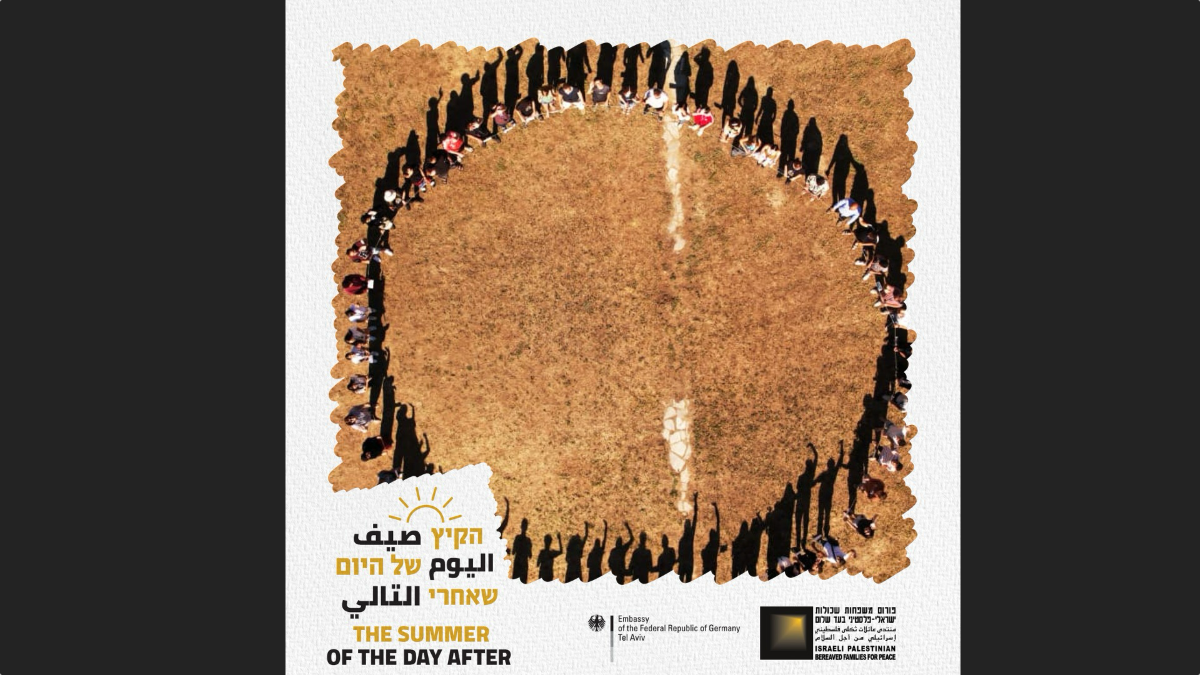
Nine days in the mountains near Thessaloniki with Israeli and Palestinian teenagers — the dialogue sessions, the hard questions, and a wish photographed through a tree.
By Ron LehmanIsraeli camper, 2026 Youth Peace Camp
To be honest, before I flew to the camp near Thessaloniki, I didn’t really know what to expect. Nine days in Greece, in the mountains, at a summer camp with Israelis and Palestinians together. As soon as we arrived, something strange happened. Suddenly, all the stress and chaos back home just disappeared, and it felt as if we had landed in a bubble completely disconnected from the rest of the world.
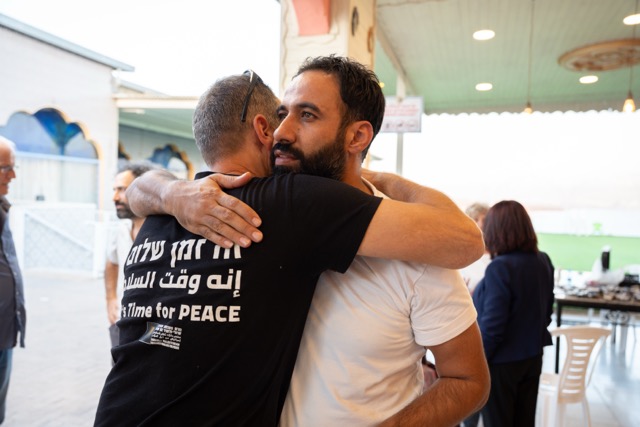
I expected things to be tense, or for us to constantly feel like we were “walking on eggshells.” But in reality, everyday life was simply pleasant. We sat together for meals, laughed, and spent time together. At some point, you catch yourself and realize that you’re simply having a good time with people who come from the other side of the conflict.
When you’re disconnected for a week and a half from all the noise back home, something shifts in the way you see things. You realize that alongside the conflict and politics, there are simply human beings your age, with the same sense of humor and the same hopes and desires.
Coming back home puts you straight back into reality, and the bubble disappears pretty quickly. Those nine days in the mountains showed me that something different is possible, even if it starts with a small group of people in the middle of nowhere in Greece.
Listening to one another
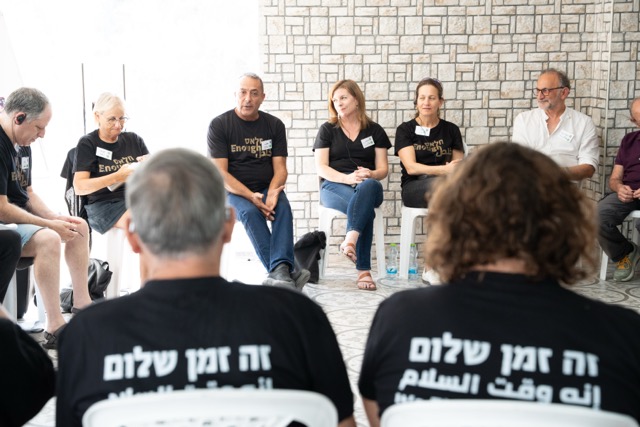
During the camp, we had several joint dialogue sessions and workshops, designed to listen to one another and to give everyone a chance to share their voice.
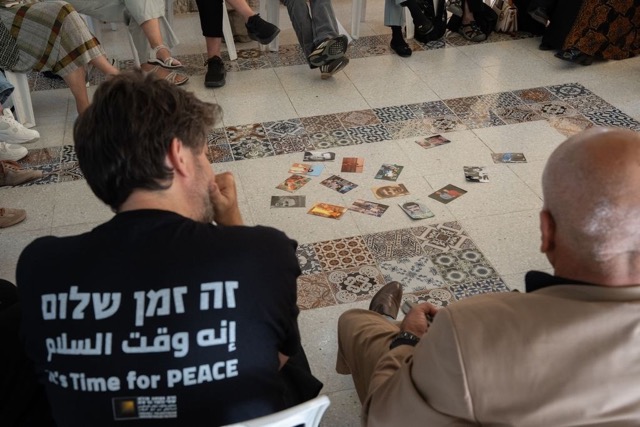
We started with a “timeline” activity, in which each person shared a significant event that had happened in their life. In most cases, it was an experience of bereavement and the loss of people close to them as a result of the conflict.
I shared the story of two of my uncles who died by suicide while serving in the military.
During the activity, we had an important conversation about the term “shaheed”, which came up frequently on the Palestinian side, and we wanted to understand what it meant. There were disagreements about it among the Palestinians as well. Some explained it one way and others differently, but, as I understood it, broadly speaking, it refers to someone who was killed by what they describe as the “occupation,” but who did not carry out an act of violence themselves.
For example, according to this understanding, a suicide bomber would not be considered a shaheed. There were disagreements and arguments about this because it is not a clear-cut issue, but that is what I understood from the discussion.
“Sorry for Asking”
After that, we had an activity called “Sorry for Asking”, in which we wrote down all the interesting questions that came to mind and wanted the Palestinians to answer. They did the same for us. One of the questions that came up most often was about the military. The Palestinians did not understand the importance of the army in Israeli society and why we see it as essential to our survival.
We explained, of course, that the State of Israel needs to have an army, and each of us personally shared whether we intended to enlist. Among us, some said yes and some said no. I think it is important that there be diversity within our group on every issue, so that they can also understand that there is no single view that represents everyone in Israeli society.
Personally, I said that I intend to enlist in the army, and also to serve in a combat role, because this is something my father and grandfather did, and I intend to continue that tradition. I was then asked why I would not refuse to serve after hearing about everything the army does in the West Bank.
I answered that I do not intend to serve in the West Bank, and that if I do serve somewhere and see something that I believe is unnecessary or unjustified, I will refuse to take part in it. I also said that I think the people who refuse to enlist because of the actions carried out by the army are very courageous, but that this is not the way I want to create change. I believe that influencing things from within is more important and can help bring about change in the army and help stop such actions.
After this activity, we had another exercise in which each side asked the other side questions, and each group answered while pretending to be the other side. The Palestinians took on the role of Israelis, and we took on the role of Palestinians. It was very moving to see how each side had listened to and understood the other, and how accurately we were able to answer the questions in the way the other side had answered them.
During the conversations, the Palestinians shared their perspective and talked about the difficulties in their lives: days when the army enters their area and everything becomes chaotic, checkpoints, and how difficult it can be to leave home and move around, severely limiting their freedom. They also talked about administrative detention and how everything has become more severe and difficult since October 7, 2023.
There was also anger about the situation that Hamas has brought upon them, as well as condemnation of Hamas’s attack on October 7, because it was a horrific act of violence that only makes the situation worse and does nothing to advance the peace that we all want to see.
During the discussion about October 7, there were gaps between the way we perceive what happened and the way they perceive it, and we needed to try to bridge those gaps. We told them about what happened there, and we also saw how the media does not always show the full picture, creating these gaps in understanding. At the same time, they told us about things they believe the army keeps from the Israeli public.
In addition to the discussions, we also had fun activities together that were meant to bring us closer and strengthen our connections: river rafting, archery, fishing, and a rap workshop, which was very successful.
A photograph of a wish
I want to focus on the photography workshop we had, which I really enjoyed and which was particularly meaningful to me. We were divided into pairs, with one Palestinian and one Israeli in each pair.
I was paired with Zen, one of the Palestinians. We were asked to photograph a wish that we had. Each pair received a different photography instruction. Zen and I were asked to take a photograph through something.
Zen photographed the Greek flag waving at the camp through a bush. For him, it symbolized his wish for freedom and peace between everyone, and for us to be able to travel freely around the world.
I photographed the beautiful landscape through a tree, using a flash. For me, it symbolized the following wish:
To see and choose the light and the good amid the darkness and evil in the world; to be optimistic :)
Ron LehmanIsraeli camper
We presented the photograph and our wishes to everyone, and then printed the photograph on paper using a sun-printing technique.
In addition, everyone chose a postcard from a selection of photographs and was asked to write a blessing on it and give it to the person they had been paired with. This is the blessing I received from Zen.
“In our free time, we played football and backgammon together and spent time in the pool. It didn’t feel at all as though each of us came from a different place, with a different perspective and from a different side of the conflict. We were simply together, in a very positive atmosphere, inside a kind of bubble disconnected from everything else.”
Making it ordinary
I’m happy that I took part in this camp and that I had the opportunity to be there. I would recommend an experience like this to anyone — to hear, to listen, and to encounter the other side directly, and also to live alongside one another, just as we hope to live together in peace.
A lot was said during the camp about how brave we were to come. I think that is true, but I also think it is a mistake to put too much emphasis on something that we want to see change. We need to normalize this — to make it feel like something natural and ordinary. Perhaps that will help bring peace a little sooner.
Thank you for everything to everyone who took part.
Shabbat shalom.
These members won’t give up on peace.
We hope you’ll join them. Your gift supports their work across the U.S.
After years of appeals, the court ruled that the Parents Circle could return to Israeli schools. The first Dialogue Meetings have already reached 300 students.
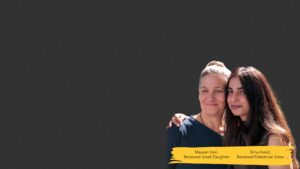
Bereaved Palestinian and Israeli peacemakers Sima Awad and Maayan Inon tour San Francisco, Los Angeles, New York and Boston this October.
Zeinat Awad
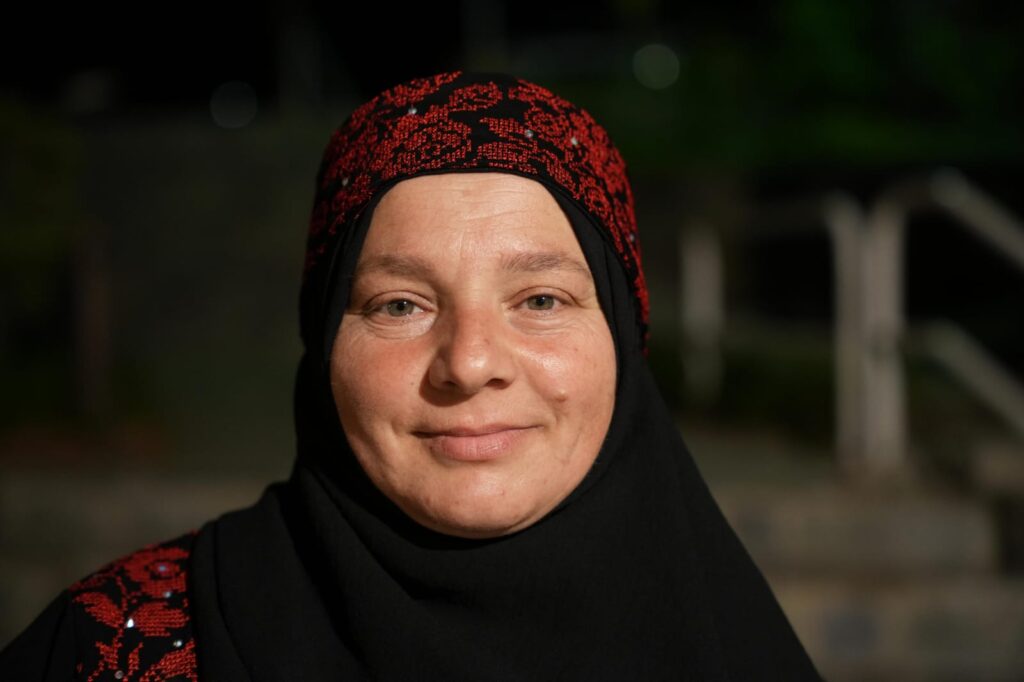
My name is Zeinat Awad, from Beit Ummar in the West Bank.
My children were born into a reality burdened by occupation, growing up witnessing daily scenes of oppression—killings, arrests, land confiscation, and the relentless expansion of settlements. My eldest son, Jaafar, was an ambitious young man, who believed that the future of his homeland could be built through education and went to law school so he could work for justice for his people. He also had a black belt in karate, and dreamed of representing Palestine in international tournaments.
One day on his way to university, he passed through a checkpoint—as usual—and his life changed forever. An Israeli soldier stopped his car, slapped him, and humiliated him in front of others. In that moment, Jaafar felt how easily a person’s dignity could be crushed, and that justice—the very thing he was studying—was absent under the occupation.
In deep frustration, a thought took shape in his mind—as he later admitted—to “teach the occupation a harsh lesson.” It was only a thought, nothing more. But before he acted upon it, the Israeli military arrested him and charged him not for an act, but for the thought itself.
Inside prison, Jaafar suffered from multiple illnesses and in early 2015, Jaafar was released in a frail and weak condition. We took him to a doctor who told me “Your son will not live for more than three months”.
We took Jaafar on an exhausting journey through hospitals for treatments—Al Ahli, Al Makassed, Al Mutlaa, and Al Mezan hospitals —where he finally passed away on April 10, 2015.
Today I am a member of the Parents Circle, and firmly believe that pain can be transformed into a force for justice and peace. My suffering continues, as my two younger sons are currently in administrative detention, with no reason given, and the youngest is only 16 years old.
Despite my loss and pain, I believe in life and in my son’s dream of education and justice. I now carry two voices within me: one of a mother who has lost her son, and one of a woman who believes that another future is possible.
2025 PCFF Members Conference
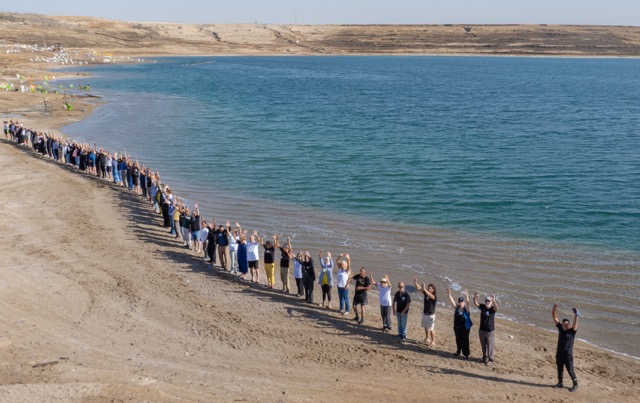
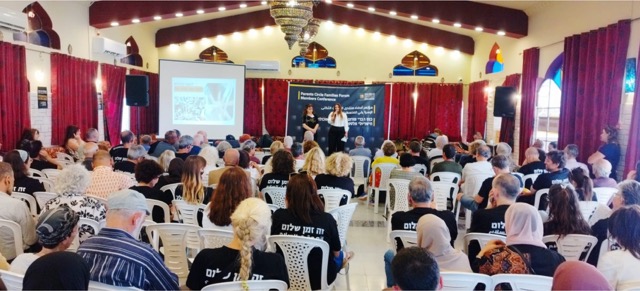
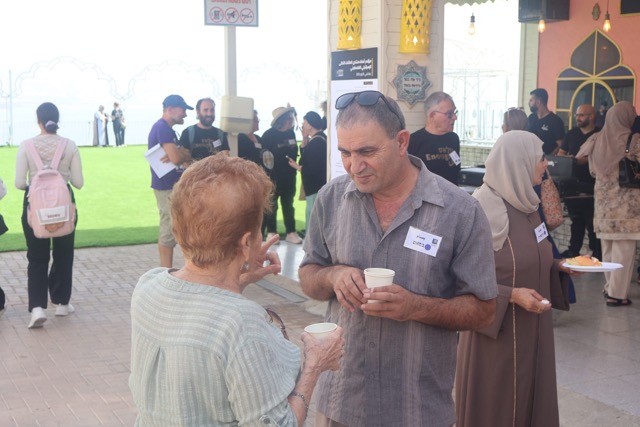
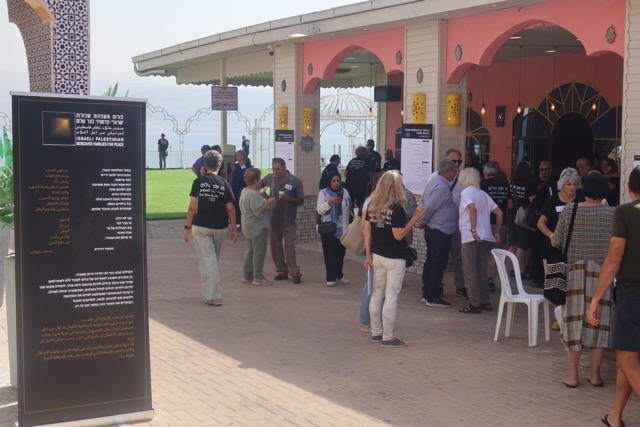
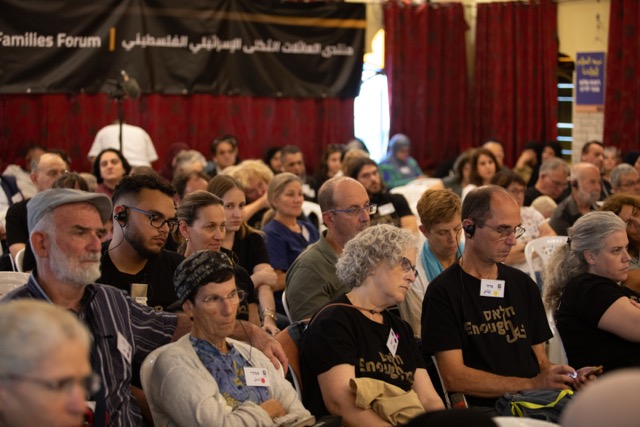
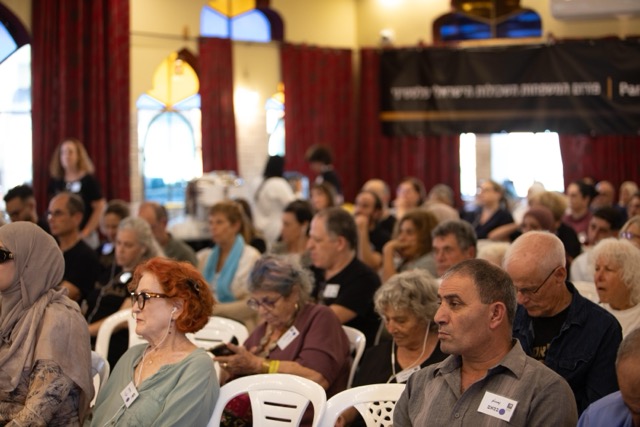
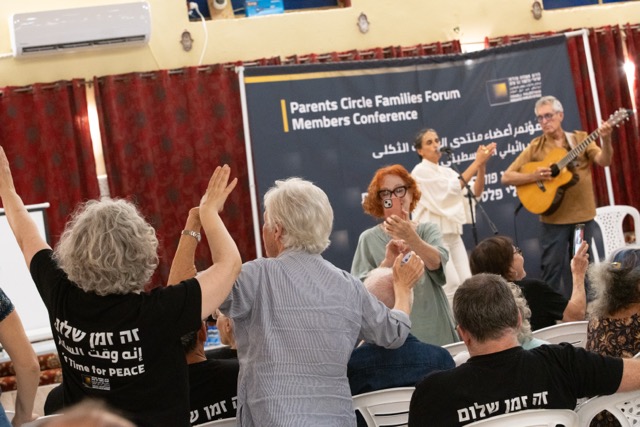
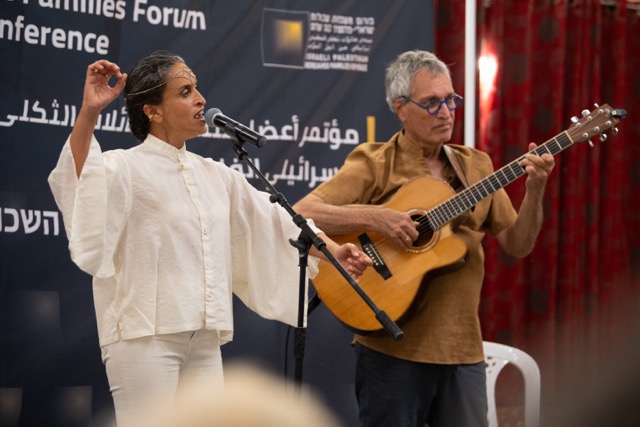
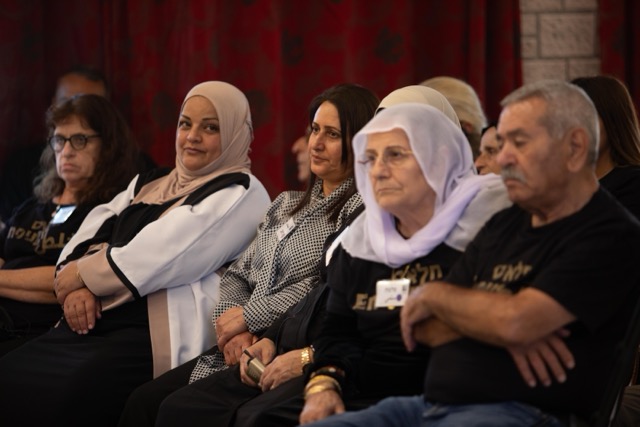
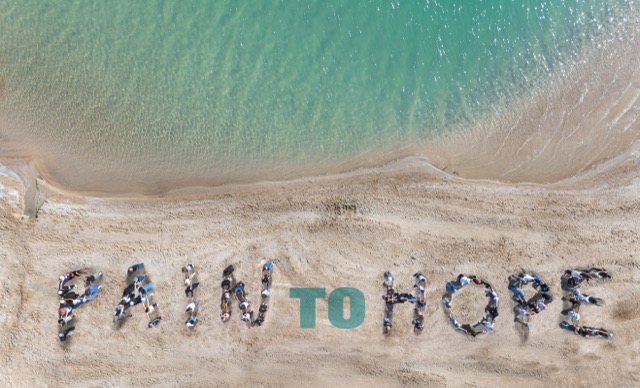
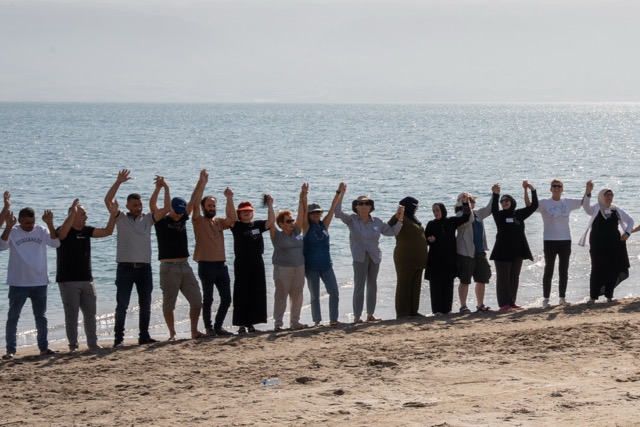
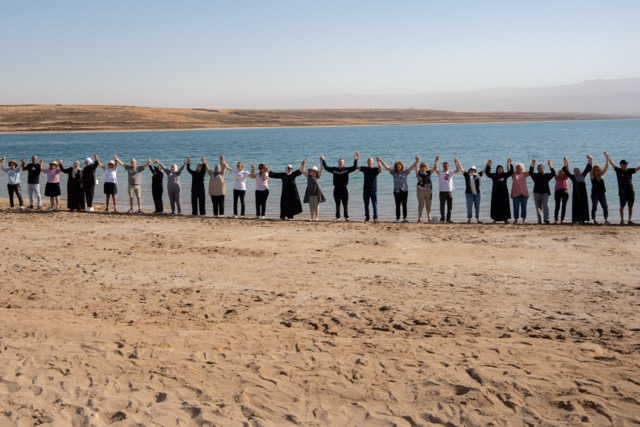
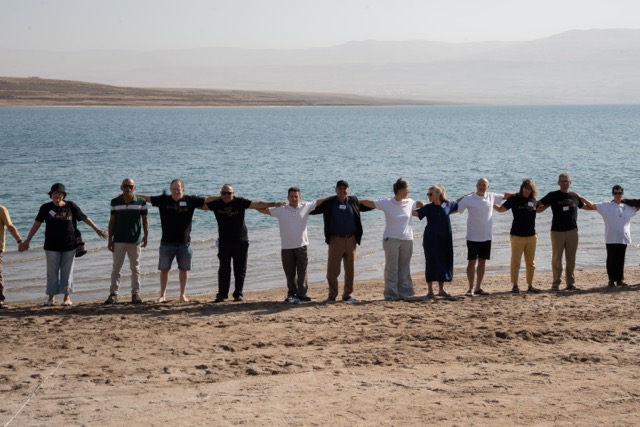
On October 30-31, over 150 bereaved Palestinians and Israelis gathered by the Dead Sea for the Parents Circle Conference. After three years of small in-person gatherings and many zoom meetings—from Covid, wartime, and military restrictions—this large gathering of hope and action is nothing short of a miracle.
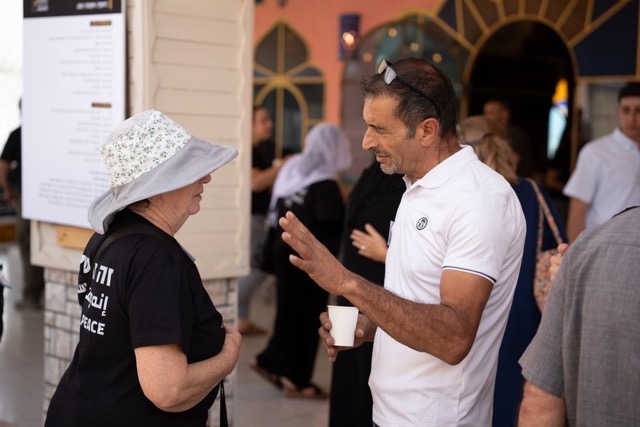
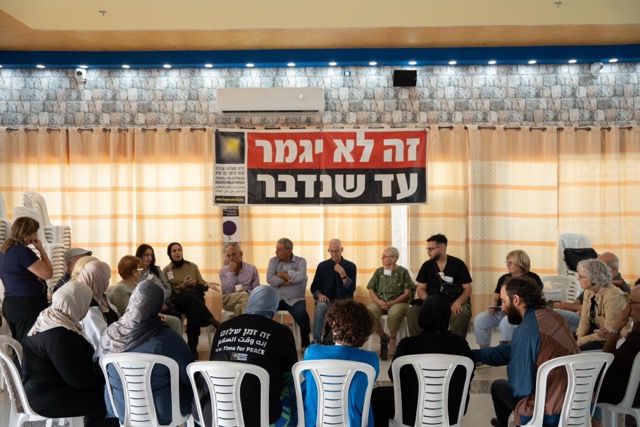
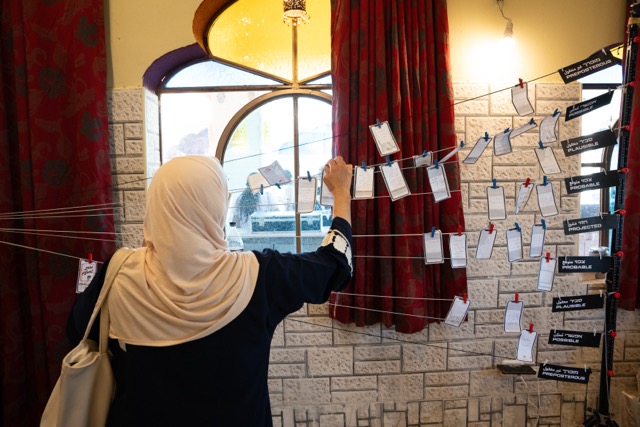
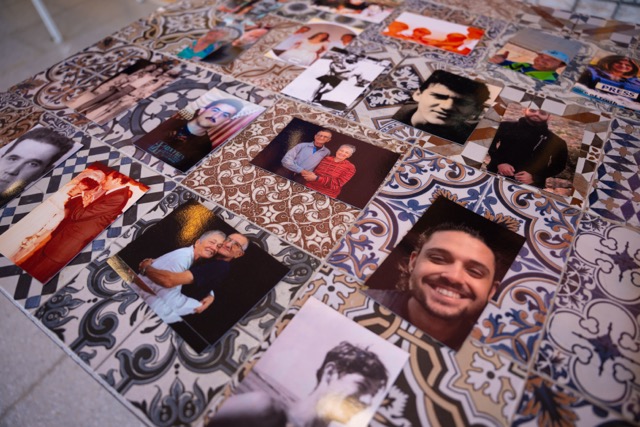
The gathering consisted of dialogue meetings, political imagination workshops, and community-building activities. For many new members, it was their first time to spend time with the “other side”.
Among the stories we heard were those of new PCFF members Liora, who shared how her son was killed on October 7, 2023 while she was trapped in the safe room of her home, and Hala, who told the story of her family — she lost 57 relatives in Gaza, including her sister and her sister’s children.
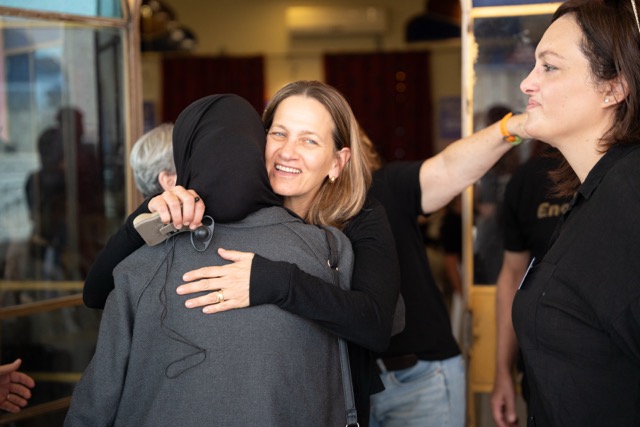
The two women stood side by side, united in pain and in their shared determination to build a future based on justice, security, equality, and an end to the occupation.
“I take from this conference the belief that there is a future. We live in a world that says peace is unrealistic, that mutual destruction is the only possible future. They tell me I’m naïve, disconnected from reality, but I believe we must stand firm and continue to make a difference.”
“I always say: from meeting comes understanding, from understanding comes action, and from action comes shared action. Together, we will walk toward a future ruled by peace. Working with the Parents Circle makes me feel that such a future is possible.”
Meeting together, Israelis and Palestinians build trust and solidarity across borders, and a nurturing community that helps catalyze the grief into action. These members won’t give up on peace in the face of injustice; we hope you will join them.
Yuval Or
My name is Yuval Or, from Kibbutz Re’im.
On October 7, 2023, my son Dror and his wife Yonat were killed in their home, and three of my grandchildren were taken hostage to Gaza, along with Dror’s body. Our lives were destroyed.
After 50 days, my grandchildren returned home thanks to a hostage exchange deal. I don’t know what I would have done without them. I have been their primary caretaker since then, because they are orphaned.
Dror’s body is still held in Gaza. When we buried his wife we left an empty plot next to her, and we hope he will be returned so they can rest together.
After everything I’ve been through, I still believe in peace. War is not a solution. The peace I’m suggesting is not a romantic notion, it’s practical. To compromise, to manage to live together, to make agreements.
I don’t see how Palestinians will forgive Israel for what we did in Gaza, and I don’t see how Israel will forgive Hamas for what they did on October 7th. I wish something would spring up here, that something new would begin, and that slowly, peace would come from within, but we have so much hatred and pain and bereavement on both sides.
But, I believe that a Palestinian in Khan Younis wants the same thing as me: to raise our kids and to live a quiet life. And we must reconcile this horrible chapter in our history so that future generations – my grandchildren – don’t have to experience this again.
Mohammed Al-Baw
My name is Mohammad Al-Baw, I live in Halhul, a small village near Hebron. I joined the Parents Circle after my brother, Ferras, was killed in 2002 during the Second Intifada.
Two months ago, Israelis from a settlement nearby came to my family’s and my uncle’s family’s vineyards, about 16 acres of land passed down from my father, and pitched a tent. They planted an Israeli flag in the soil my father and grandfather cultivated. Israeli soldiers built a yellow gate blocking any Palestinian from entering. The soldiers guard the settlers. When I tried to walk onto my land, an officer told me, “You’re not allowed to enter.” His reason: “That’s the policy.” And just like that, a new policy was born.
On another day, when I filmed this scene, a soldier smashed my phone and said, “If you don’t leave now, I’ll kill you.” When I told him that if he is standing on my land, that is occupation, he replied, “There is no occupation.” He noticed the photos of my daughters in my wallet and asked if I worried about them. I told him: “Of course I am. You can take your children and go anywhere. I have only this place. We are like a fish. If you take it out of water, it will die.” His answer, “Okay, so die.”
These moments never make it into official records. They are not rare; they are happening across the West Bank. In the past, settlers might throw stones or burn a house. Today, they kill. There is no law here that protects us. The Israeli military protects them; Israeli police do not help us; Palestinian police cannot or do not protect us from settler violence.
Some people ask why I still work with Israelis. My answer is that if you believe in something, you don’t hesitate or give up. Even now, especially now, I meet with my Israeli colleagues. It is not easy.
My work with the Parents Circle has taken me into Israeli high schools and communities to tell my story in Hebrew, to speak about the Palestinian experience, and to insist that there is more to our lives than the black-and-white narratives of good and evil that we are taught.
Liat Atzili
I am Liat Atzili from Kibbutz Nir Oz.
My partner, Aviv and I built a life and a family in Nir Oz. We were an inseparable part of this little community, which fulfilled our aspirations and needs. Mine as an educator, and Aviv’s as a farmer and an artist.
On October 7th, our kibbutz was attacked, conquered, and destroyed by Hamas. A quarter of the residents were either killed or kidnapped, including me. The time I spent as a hostage in Gaza was of complete despair, unending fear for my friends and family, and long days. I was nervous that I wouldn’t survive.
After 54 days in captivity, I was returned home. The following day, my family and I were told that Aviv was killed on October 7th. Aviv had hundreds of friends, he traveled and created, and made the most of every opportunity; he truly loved life.In his final year, Aviv fulfilled many dreams, the greatest being to share his art publicly. While managing the kibbutz’s agricultural garage, he painted on tractor parts and scrap metal, blending his love for metals and the Negev fields into his creations. Our children looked up to him and I feel like I had the greatest privilege to share my life with him.
I always believed that war is not our destiny, and that any conflict, including ours, can be solved. This war has proven to me beyond a doubt that we cannot continue fighting, that we have no right to impose the continued suffering of war on future generations on either side. I am ready today, more than ever, to do everything in my power so that our children can live here in peace and security.
Hala al-Bukhari
My name is Hala Al-Bukhari, and I live in Jerusalem.
My sister and her large family, including children and grandchildren live in Gaza. Despite the distance, I used to communicate with them daily, checking on their health via video call.
On the morning of October 7, 2023, my son told me to watch TV to see what was happening in southern Israel. From that day, fear has overwhelmed my heart.
Then came the morning of October 18, 2023, bringing the fateful news: My sister’s house was bombed, and she, her husband, her children, and grandchildren were in the house—33 innocent lives lost in this horrific massacre.
Two years later, and I’m not giving up.
With every word I write, I struggle to express the extent of my pain. Our hearts bleed with grief for those we have lost and continue to lose. Our sorrow is profound, and our souls yearn for the peace we all dream of.
Let us all live in peace and build a better future for our children. War brings only destruction and ruin to everyone involved, whether Palestinian or Israeli. It is always the innocent people who suffer the most.
Kholoud Houshiya
I am Kholoud Houshiya and I live in the village of Al Yamun near Jenin. Originally my family is from Haifa. I wasn’t able to experience childhood due to the occupation, which forcibly displaced my family to Jenin under oppression and humiliation.
Later, I married and I gave birth to my first child, whom I named Mohammed. I raised him with all my love and effort.
Mohammed was a young man who loved life dearly, and he loved me even more. He was both my son and my friend, thanks to our close bond.
Mohamad was 23 years old. He worked in Israel and helped his father.
On January 2, 2024 Mohamed took a picture of the Israeli army tearing down my neighbor’s house. The army thought otherwise and they shot him. Just because he was Palestinian.
I always dreamed of seeing my son as a groom, just like any mother. But now, I am left with him buried in my garden. I had hoped to see him, his wife, and his children in my house, but now, every day, I look at his grave from the window in my room.
My message to the world is this: Enough. Enough killing, enough injustice, enough destruction, enough oppression. Enough violence on both sides.
It is not easy for a mother to recount the story of her son’s death—the pain is indescribable. I cannot bear the loss of another child. This is why we must raise the voice of the mothers for a better future for all children and young generations – Palestinians and Israelis.
Maayan Kfir Shani
Hala al-Bukhari
I am Hala Al-Bukhari, living in Jerusalem.
My daughter, my sister and her large family, children and grandchildren live in Gaza. Despite the distance, before the war, I used to communicate with them daily, checking on their health via video call.
On the morning of October 7th, my son told me to watch TV to see what was happening in southern Israel. From that day, fear has overwhelmed my heart.
Then came the morning of October 18th, bringing the harsh news: My sister’s house was bombed, and she, her husband, her children, and grandchildren were in the house—33 innocent lives lost in this horrific massacre. Since then, my fear for my daughter has grown. I have pleaded with human rights organizations, seeking any means to get her out of the hell of war and the horror of the massacres. Eventually we succeeded to get my daughter out of Gaza.
With every word I write, I struggle to express the extent of my pain. Our hearts bleed with grief for those we have lost and continue to lose. Our sorrow is profound, and our souls yearn for the peace we all dream of.
Let us all live in peace and build a better future for our children. War brings only destruction and ruin to everyone involved, whether Palestinian or Israeli. It is always the innocent people who suffer the most.
Liat Atzili
I am Liat Atzili from Kibbutz Nir Oz.
My partner, Aviv and I built a life and a family in Nir Oz. We were an inseparable part of this little community, which fulfilled our aspirations and needs. Mine as an educator, and Aviv’s as a farmer and an artist.
On October 7th, our kibbutz was attacked, conquered, and destroyed by Hamas. A quarter of the residents were either killed or kidnapped, including me. The time I spent as a hostage in Gaza was of complete despair, unending fear for my friends and family, and long days. I was nervous that I wouldn’t survive.
After 54 days in captivity, I was returned home. The following day, my family and I were told that Aviv was killed on October 7th. Aviv had hundreds of friends, he traveled and created, and made the most of every opportunity; he truly loved life.In his final year, Aviv fulfilled many dreams, the greatest being to share his art publicly. While managing the kibbutz’s agricultural garage, he painted on tractor parts and scrap metal, blending his love for metals and the Negev fields into his creations. Our children looked up to him and I feel like I had the greatest privilege to share my life with him.
I always believed that war is not our destiny, and that any conflict, including ours, can be solved. This war has proven to me beyond a doubt that we cannot continue fighting, that we have no right to impose the continued suffering of war on future generations on either side. I am ready today, more than ever, to do everything in my power so that our children can live here in peace and security.
Mazen Abu Zir
I am Mazen from Bethlehem. Many of my family members live in Beit Lahiya, Gaza. They lived in a beautiful house and went on about their lives, despite the siege.
It all stopped on October 10, 2024, when, my uncle, his three sons, and his son-in-law were outside near the house. Israeli aircraft targeted them with bombardment and gunfire. My aunt managed to bring their bodies into the house. With trembling hands, she was forced to gather what remained of them, unable for over a week to lay her husband and three sons to rest. I cannot believe that so many of my family are dead, and that I cannot go there to help them and cry with them.
The depth of pain in Gaza is beyond description and cannot be fathomed by the human mind. How much longer will this hatred on both sides continue? How much longer will we endure this nightmare? All the Palestinian people desire is a dignified life free from occupation—a fundamental right, just like that of any other people in the world.
The suffering will not cease until we collectively seek pathways to peace and understanding. Revenge will not forge a shared future; we must strive to find common ground and solidarity. Let us unite for a brighter future for the generations to come, and let us raise our voices for peace, so that together we may end this cycle of violence and finally live in safety and harmony.
Sign up to receive updates from American Friends of the Parents Circle